
I always thought I was going to be a pastor. In fact, I surrendered to preach when I was 13 years old. But long before that, my mom had me singing in church when I was just six or seven. As I grew up, people would often tell me, “You’re going to make a great music director someday.”
And I would tell them, “No, I’m not!”
But as I began serving in ministry, God gave me a real burden for church music and a love for the choir. What started as something I never planned to do became one of the greatest passions of my life.
Today, I have the privilege of serving as the music director at Lancaster Baptist Church. I love Sundays. Sunday is my favorite day of the week. But I also love the special days on the church calendar: Christmas, Easter, and our Spiritual Leadership Conference. These are some of my favorite opportunities to serve the Lord through music.
Psalm 33:3 says, “Sing unto him a new song; play skilfully with a loud noise.”
I love the balance in that verse.
First, “Sing unto him.” That speaks to the purpose of our music. Everything we do should ultimately be for the Lord. It’s not about showcasing our talent, impressing a crowd, or putting on a performance. Our music is to bring glory to God.
Notice the second phrase: “Play skilfully.” That speaks to the preparation of our music. We should not only desire to bring praise to God, but we should strive to offer Him the very best of the abilities and opportunities He has given us.
And I believe that principle is especially important when it comes to the special days and programs of our churches.
Christmas, Easter, conferences, and other special services provide unique opportunities. They give us a chance to communicate biblical truth, encourage our church family, reach visitors, and sometimes do things musically that we might not normally do in a Sunday service.
But those opportunities don’t just happen. They require planning, preparation, and purpose.
So, I want to take a few minutes and walk you through what we do at Lancaster Baptist Church when it comes to special days: how we approach them, how we plan for them, and how we prepare our music ministry to make the most of them.
Plan the Program
Our goal is to give God our best and to help the people we serve with give God their best.
Listen and build your list. Don’t wait until you need music to start looking for music. I once worked with a man who would walk in around November and ask whether anyone had heard any good Christmas songs lately because the choir needed more. As an intern, I remember thinking, what in the world? Our special days deserve more than that.
I keep folders in the notes app on my phone for Easter, Christmas, and other events. I listen all year long and work those lists throughout the year. I put little marks next to each song: this one we are doing for sure, this one is a maybe, this one I would like to fit in if the flow allows.
Collect more than songs. Look for medleys, solos, orchestrations, narration, and drama ideas. Watch what other churches are doing. It is okay to borrow ideas and get help. We use six or seven publishers, and I check those sites weekly. Praise Charts can often save you money on something you first found elsewhere. Don’t rely on just one choral club membership.
Select intentionally. Run every song through a few questions.
Is it enjoyable? Will your choir enjoy singing it, and will your congregation enjoy joining in? That is not the only factor, but it matters.
Is it achievable? For our 40th anniversary conference, I wanted to open with “All Praise Rising,” a song that goes very high. I would not have done it if we did not have sopranos who could hit those notes. If you do not have the people to sing it, change the key, find another arrangement, or skip it. Do the songs you can accomplish well.
Is it worshipful? Scripture says to worship the Lord in the beauty of holiness. If a song does not lift Him up and point people to biblical truth, there are plenty of others that do.
Does it fit? At conference we theme our nights: what He has done, what He is doing, and what He will do. If a song does not fit the flow, we set it aside, no matter how much we love it. Sometimes you have to hold a song for a year so the story keeps moving.
Is it worth the investment? A difficult song may be worth doing, but only if you have the rehearsal time to prepare it.
Partner with your pastor.
I am thankful for the liberty my pastor gives me, but he also cares deeply about every service. Sometimes he tells me he does not like a song in a certain spot, and it is my job to adapt, even if I thought it would go over well. You can respectfully try to sell a song you are passionate about, but never act in a way that hurts your pastor’s ability to lead and preach. If he walks into every Sunday wondering what the next fight with the music people will be, you are not helping him. It is not about you. It is about the Lord. When you have liberty, have a vision. When your pastor wants more involvement, workshop it together.
Build the timeline. Luke 14 asks, “For which of you, intending to build a tower, sitteth not down first, and counteth the cost?” We can apply that principle to special days. Set dates, and when you reach them, begin the next stage of preparation. I had our Christmas music selected by June this year.
For a 40 to 60 minute program, I recommend three months at a minimum, and four is better. Ten rehearsals are crucial. With fewer, people end up glued to their music and worried about their parts. Our goal is for the choir to be so comfortable that they are free to truly praise God and not distract anyone from Him.
This year tested that. Our renovation dates kept shifting, we lost weeks of choir, and Christmas is barely touched. It is not a comfortable year, so I am giving the choir every resource and extra practice I can, while remembering they are volunteers. You cannot expect excellence without allowing time to prepare. Good planning does not mean the plan never changes. It means you know what to do when it does.
Present the Vision
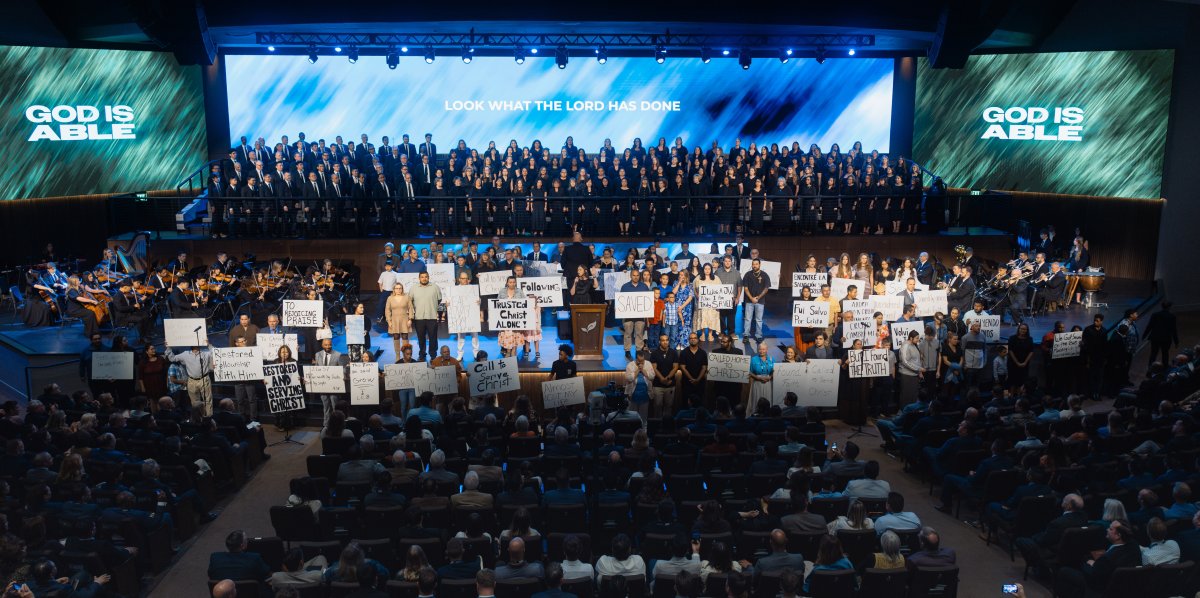
Once the program is planned, cast the vision early. We hold two music orientations each year, and this year we added a summer potluck for the choir and orchestra. After everyone ate, I went up front and walked them through the Spiritual Leadership Conference. I explained our nightly themes, played clips of songs, and described how people would walk out with cardboard testimonies in the middle of a song.
Then I turned to Christmas and told them about the LED wall, the shepherds on the platform, and the moment the angels appear. I played the song that follows. People got excited, and excited people want to be at practice and want to know their music.
A few reminders on this:
Create excitement. Play demos, introduce themes, and talk about songs you love. If your people are not excited, it may be because you are not.
Explain the purpose. Who will attend? Most likely people who are not saved. What truth are we communicating, and how can God use this to present the gospel?
Set expectations. Give them the extra practices, sectional times, and everything you need from them.
Communicate continually. Our choir members sign a commitment of what is expected of them. We give out cue cards, schedule people in and out with microphones, and send texts. On Sunday mornings I have our secretary text a lyric from that day’s song with a music emoji and a “See you at 8:45!” I want them to read those words after their bowl of cereal and have the song in their hearts before they ever step into practice.
Prepare the Program
Finally, prepare yourself. Have you ever opened your music for the first time at the start of a practice? Don’t. People are giving up their time to be there, and you are the one setting the example. Have your heart right with the Lord and your time with Him before you walk in. Know the difficult sections, know what your instrumentalists need, and know how much time each song will take. When we rehearse seven or eight songs in an evening, I have to know exactly which measure we are going to fix before we sing it again. Your preparation determines how much everyone else can accomplish. Don’t waste their time because you did not spend time on yourself.
Then develop the music progressively in four steps:
Introduce it. Let them hear it and cast the vision. Sometimes I sing the melody through the whole song myself.
Learn it. Teach the tune and the rhythms. Many songs today are full of syncopation, so we clap and speak the rhythm together until we are truly together.
Refine it. Polish the details until the song is comfortable.
Combine it. Bring in the soloists, the narration, and the orchestra so everything is familiar before you sing it in the service.
Give God Your Best
None of this is about performance. It is about preparing well so that when the day comes, you and your people are free to worship. Sing unto Him, and play skilfully. Give Him your best, and help the people you lead do the same.